Luma Soda Shark Tank Update: Did Jim Otteson Lose Everything?
Jim Otteson had a massive problem. As a high-stakes trial lawyer, he fueled his grueling preparation sessions by drinking up to a dozen diet sodas every single day.
When he finally realized the artificial sweeteners and chemical additives were taking a toll on his health, he set out to create a cleaner, naturally sweetened alternative.
He poured an astonishing $1.75 million of his own money into Luma Soda, walking into the Shark Tank with a polished pitch and a massive amount of sitting inventory.
What followed was a masterclass in the harsh realities of the direct-to-consumer beverage industry.
The Bottom Line (Executive Summary)
For readers looking for a quick update on where Luma Soda stands:
- Zero Operations: Luma Soda is completely out of business. The company failed to gain traction, and the founder stepped down as CEO in early 2019.
- Total Financial Loss: Otteson walked away from the business entirely, taking a total loss on his initial $1.75 million to $2 million personal investment.
- Founder Pivot: Jim Otteson returned to the legal field, currently working as a managing director at a prominent legal recruiting firm in 2026.
What is Luma Soda?
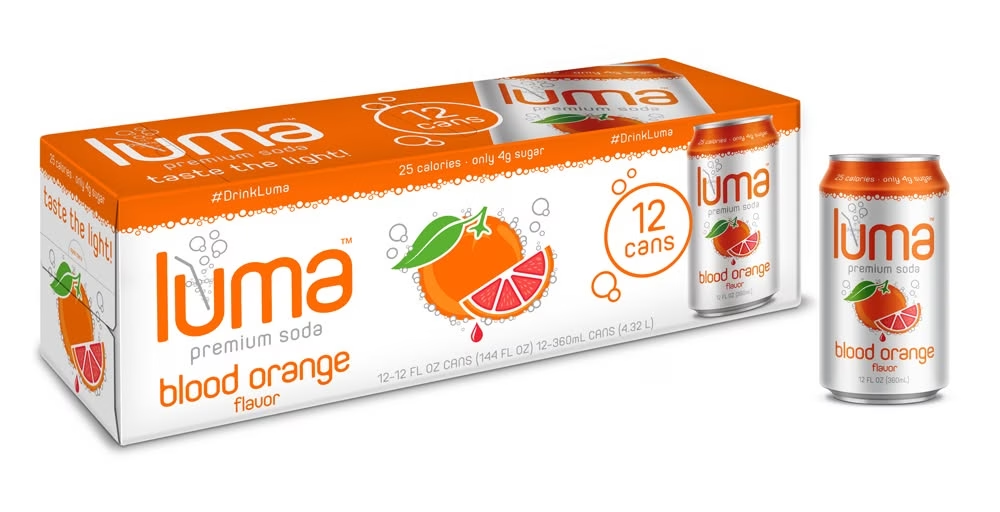
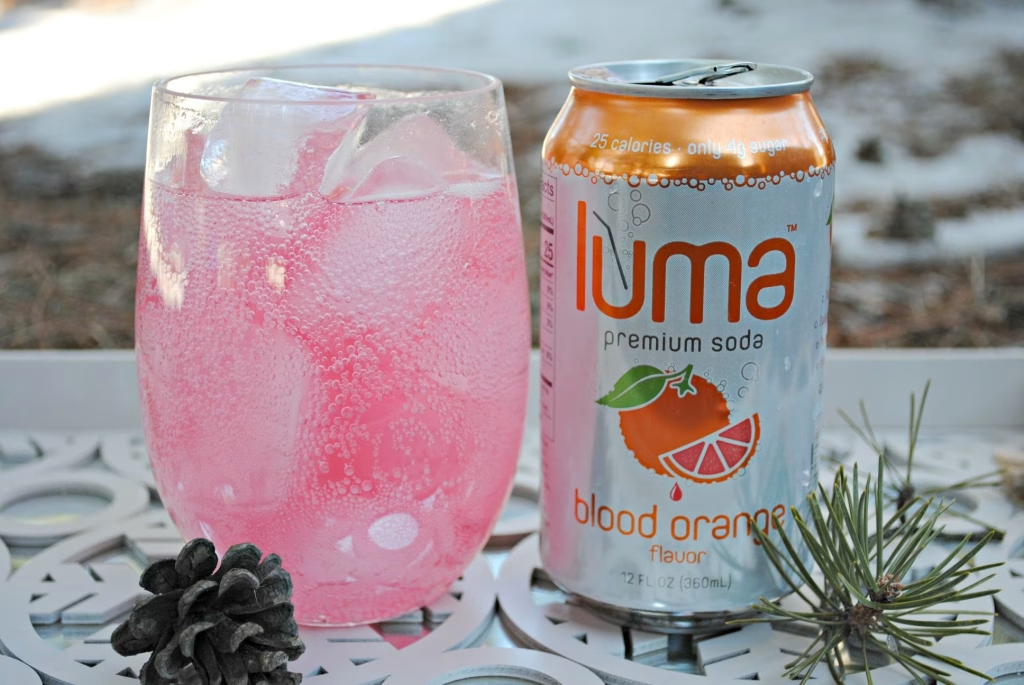
Luma Soda was marketed as a “clean” carbonated beverage formulated to serve as a low-sugar, low-calorie substitute for traditional sodas. Instead of relying on controversial artificial sweeteners like aspartame, sucralose, or heavy doses of stevia, Luma was naturally sweetened with a proprietary blend of monk fruit and a touch of honey, resulting in just four grams of sugar and 25 calories per 12-ounce can.
| Feature | Details |
| Industry | Food & Beverage (D2C Drtinks) |
| Founder(s) | Jim Otteson |
| Core Product | Monk fruit and honey-sweetened soda |
| Retail Price | $19.99 per 12-pack (online) |
| Target Audience | Health-conscious consumers, former diet soda drinkers, clean-ingredient shoppers |
The Founder Behind Luma Soda
Before standing on the iconic Shark Tank carpet, Jim Otteson built a successful, 26-year career as a trial attorney. The legal profession is notorious for its brutal hours, and Otteson coped with the demanding workload by self-medicating with caffeine and carbonation. He admitted to consuming twelve or more diet sodas a day.
The “aha” moment arrived when Otteson took a hard look at the ingredient labels on his daily beverages. Disturbed by the cocktail of artificial colors, synthetic sweeteners, and chemical preservatives, he searched the market for a healthier alternative.
Finding nothing that satisfied his craving for the classic cola bite without the accompanying sugar crash or chemical aftertaste, he decided to formulate his own.
Otteson treated his new venture with the same aggressive dedication he applied to his legal cases. He liquidated assets, borrowed against his life insurance policies, and tapped into home equity lines of credit to self-fund the research and development.
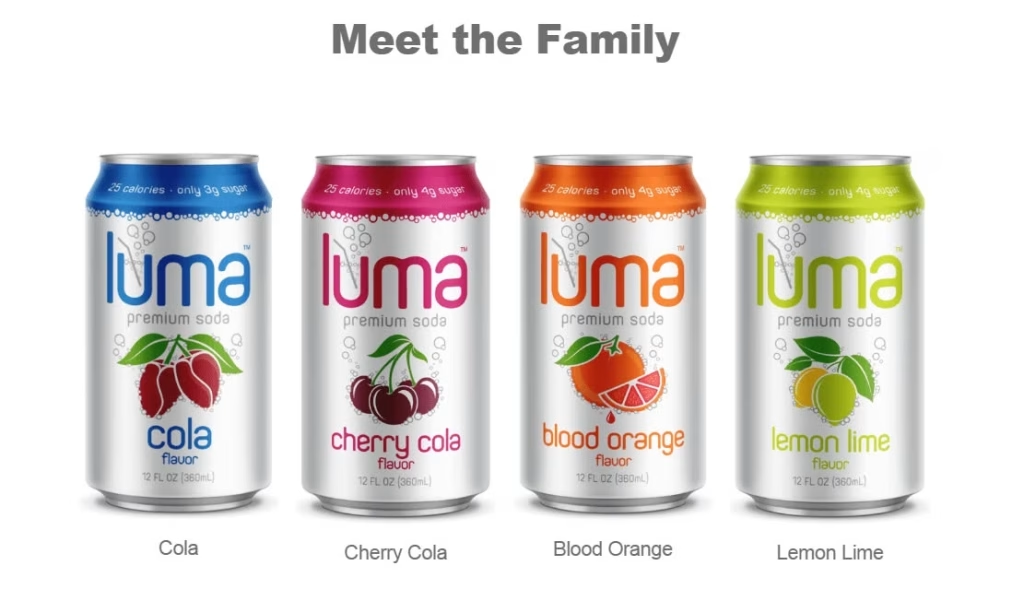
By the time he was ready to launch Luma Soda in January 2017, he had formulated four distinct flavors: Cola, Cherry Cola, Lemon-Lime, and Blood Orange. He started selling the beverage online and at a select few local retailers near his home in Palo Alto, California.
Luma Soda’s Shark Tank Pitch & Deal
Otteson appeared on Shark Tank in Season 10, Episode 19, which aired in April 2019. He confidently strode into the Tank seeking $500,000 in exchange for a 20% stake in his company, placing a $2.5 million valuation on Luma Soda.
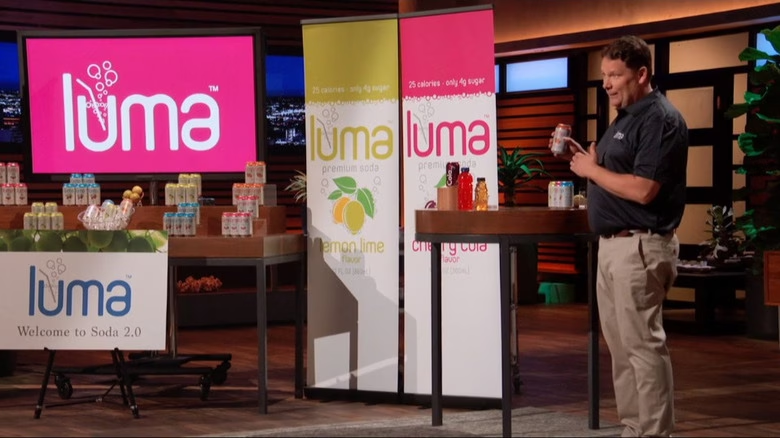
To demonstrate the sheer volume of sugar hiding in everyday beverages, he used visual aids, piling up sugar cubes next to popular sports drinks and fruit juices. He then handed out samples of his four Luma flavors.
The tasting portion of the pitch proved highly divisive. While Kevin O’Leary and Barbara Corcoran actually enjoyed the Cherry Cola flavor, Lori Greiner visibly recoiled, making it clear she despised the taste of all four varieties. The real tension, however, ignited when the Sharks began dissecting Otteson’s finances.
Otteson revealed that year-to-date sales hovered around a mere $180,000. Worse, all of those sales were generated through direct-to-consumer online channels at a steep price of $19.99 per 12-pack.
The Sharks instantly zeroed in on his repeat customer rate, which Otteson confessed was a dismal 10%.
The fatal blow to his pitch came when Otteson disclosed his inventory. He had $600,000 worth of Luma Soda sitting idle in a warehouse. He explained that aggressive, commission-only salespeople had promised him massive retail purchase orders, prompting him to run full production batches (roughly 204,000 cans per SKU) to meet the anticipated demand.
Those retail accounts never materialized, leaving Otteson swimming in unsold, perishable inventory.
| Pitch Metric | Details |
| Season / Episode | Season 10, Episode 19 |
| Initial Ask | $500,000 |
| Equity Offered | 20% |
| Implied Valuation | $2.5 Million |
| Sharks Present | Mark Cuban, Kevin O’Leary, Lori Greiner, Barbara Corcoran, Rohan Oza (Guest Shark) |
| Notable Offers | Barbara Corcoran offered $250,000, contingent on Rohan Oza joining the deal |
| Final On-Air Deal | No Deal |
Did the Luma Soda Deal Actually Close?
No deal was finalized inside the Tank, nor off-camera. The business fundamentals simply contained too many red flags for the investors to overlook.
Lori Greiner was the first to exit, citing her distaste for the product. Guest Shark Rohan Oza, a legendary figure in the beverage industry known for his work with Vitamin Water and Bai, passed on the opportunity.
Oza noted that while he liked the concept, the cola flavor needed perfecting, and the business lacked the necessary competitive moat to survive against massive conglomerates.
Furthermore, Oza pointed out that Otteson wildly overspent on flavor development and manufacturing.
Barbara Corcoran admired Otteson’s relentless work ethic and attempted to structure a deal. She offered to put up $250,000 of the requested $500,000, but only if Oza agreed to split the deal and provide his beverage industry expertise. Oza firmly declined, forcing Corcoran to withdraw her offer.
Mark Cuban advised Otteson to figure out a way to liquidate his current inventory before making any further moves. Kevin O’Leary, living up to his “Mr. Wonderful” moniker, delivered the harshest and perhaps most accurate advice of the night: he told Otteson to recognize the business as a total loss, stop all sales immediately, and shut the company down.
Luma Soda After Shark Tank: The Current Update
Kevin O’Leary’s brutal advice proved prophetic. The post-Shark Tank “bump”, a phenomenon where companies see massive spikes in traffic and sales immediately after their episode airs, was not enough to save Luma Soda.
In fact, the writing was on the wall well before millions of viewers watched Otteson’s pitch. Shark Tank episodes are typically filmed several months prior to their broadcast.
By September 2018, months before the April 2019 air date, Luma Soda had completely abandoned its social media presence, ignoring desperate comments from the few customers who actually wanted to reorder.
According to professional records, Jim Otteson officially stepped down as the CEO of Luma Soda in January 2019. The company’s main website vanished shortly after, and their Amazon storefront transitioned entirely to “currently unavailable” status.
Financial pressures compounded, and Luma Soda officially shut down operations, eventually declaring bankruptcy in 2021.
As of today, Luma Soda remains a cautionary tale in the startup world. Otteson successfully pivoted back to his roots in the legal industry. Following his exit from the beverage world, he served as senior counsel at Dechert LLP and currently works as a managing director at Major, Lindsey & Africa, a premier legal search firm.
What is the Net Worth and Valuation of Luma Soda?
As of today, the estimated net worth and business valuation of Luma Soda is $0. The corporate entity is dissolved, and the intellectual property is inactive.
When Otteson pitched Luma Soda, he claimed a $2.5 million valuation based on his own internal metrics and the heavy personal capital he had injected into the brand. However, a valuation is only valid if an investor is willing to pay it. The Sharks universally rejected that number, looking instead at the reality of a 10% customer retention rate against a $1.75 million deficit.
The financial wreckage left behind by Luma Soda was severe. Otteson confirmed on the show that his investment eventually ballooned to roughly $2 million. Because the company failed to secure retail distribution and struggled to sell its $600,000 backlog of inventory, the vast majority of that capital was permanently lost.
Is Luma Soda Still in Business?
No. Luma Soda is no longer in business. The company completely ceased operations between late 2018 and early 2019, culminating in a formal bankruptcy in 2021.
You cannot purchase Luma Soda on Amazon, in retail grocery stores, or through any direct-to-consumer websites. The brand’s digital footprint has been entirely erased, save for historical reviews and Shark Tank reruns.
Why Did Luma Soda Fail? (3 Hard Business Lessons)
Analyzing Luma Soda’s collapse offers valuable insights for modern entrepreneurs looking to break into the hyper-competitive consumer packaged goods (CPG) sector.
1. The High Cost of Customer Acquisition
Selling heavy cases of liquid through the mail is notoriously expensive. Charging $19.99 for a 12-pack of soda creates massive friction for the average consumer. When you factor in the costs of digital marketing, freight, and packaging, a direct-to-consumer beverage brand must have a high repeat purchase rate to survive. Luma’s 10% repeat rate meant they were losing money on almost every new customer they acquired.
2. Manufacturing Without Purchase Orders
Otteson made a fatal inventory error by ordering full truckloads of product, over 200,000 cans per flavor, based on verbal promises from salespeople rather than signed purchase orders from retailers like Whole Foods or Kroger. This left his capital trapped in aluminum cans sitting in a warehouse, slowly approaching their expiration dates.
3. Competing Without a Moat
Rohan Oza correctly identified that Luma Soda lacked a defensive moat. Even if Luma achieved moderate success, beverage titans like Coca-Cola or PepsiCo could easily replicate a monk-fruit-sweetened cola and crush Luma with superior distribution networks and pricing power.
Top Luma Soda Alternatives
While Luma Soda failed to capture the market, the demand for healthier, low-sugar carbonated beverages absolutely exploded in the years following Otteson’s pitch.
If you are looking for alternatives that actually survived the brutal beverage wars, the market is flush with highly successful options:
- Olipop: This brand essentially created the “prebiotic soda” category. With flavors that perfectly mimic classic sodas (like Vintage Cola and Classic Root Beer), Olipop features under 5 grams of sugar, high dietary fiber, and a formulation that promotes gut health. They dominate the shelves at Target, Whole Foods, and local grocery chains.
- Poppi: Another massive Shark Tank success story. Originally pitched as “Mother Beverage” by founder Allison Ellsworth, Poppi secured an investment from guest Shark Rohan Oza—the exact same Shark who passed on Luma Soda. Poppi utilizes apple cider vinegar for gut health, boasts a massive social media presence, and is widely considered one of the fastest-growing beverage brands of the decade.
- Zevia: For consumers strictly looking to avoid sugar without the functional gut-health additives, Zevia remains a staple. Sweetened entirely with stevia, it offers zero calories and zero sugar across a massive portfolio of traditional soda flavors.