Table of Contents
- What is Life Lift Systems?
- The Founders Behind Life Lift Systems
- Life Lift Systems’ Shark Tank Pitch & Deal
- Did the Life Lift Systems Deal Actually Close?
- Life Lift Systems After Shark Tank: The Current Update
- What is the Net Worth and Valuation of Life Lift Systems?
- Is Life Lift Systems Still in Business?
- Top Life Lift Systems Alternatives
Living in Tornado Alley means accepting the reality that severe weather can tear through a neighborhood with little warning, forcing families to scramble for safety.
Levi Wilson and Tim Todd walked into the Shark Tank with a solution to this exact terror: a bulletproof, crush-resistant metal shelter disguised as a standard bed frame.
The pitch captured the Sharks’ attention and secured a massive investment from Mark Cuban, but the story of Life Lift Systems is proof that landing a high-profile deal does not guarantee long-term survival.
Executive Summary
- Secured a Major Shark: Life Lift Systems closed a $550,000 deal with Mark Cuban for 25% of the company during Season 10.
- Rapid Expansion and Rebranding: The company rebranded as Vortex Vaults in 2021, expanding its product line and hitting $4 million in annual revenue by 2023.
- Sudden Collapse: By late 2023, the company abruptly ceased operations amid mounting customer complaints regarding faulty lift mechanisms, unfulfilled orders, and disconnected contact lines.
What is Life Lift Systems?
Life Lift Systems (later rebranded as Vortex Vaults) is a company that designed and manufactured heavy-duty, telescoping storm shelters built directly into a residential bed frame.
By utilizing a mechanical scissor-lift powered by a 110-volt wall outlet and battery backup, the structure expands upward in about 80 seconds, providing immediate shelter from EF5 tornadoes, Category 5 hurricanes, and home invasions without requiring extra floor space.
| Feature | Details |
| Industry | Home Safety & Disaster Prep |
| Founder(s) | Levi Wilson and Tim Todd |
| Core Product | Telescoping under-bed storm shelter |
| Retail Price | $4,600 to $6,000+ (Based on size/features) |
| Target Audience | Homeowners in tornado/hurricane zones lacking built-in shelters |
The mechanical shelter was available in three distinct configurations to accommodate different housing setups. The top-tier “Telescoping” model provided up to 57 inches of vertical clearance when fully raised. For tighter spaces, they offered a “Slope Top” model which raised only the head of the bed, yielding 38 inches of headroom, and a standard non-raisable “Platform” version.
To meet federal safety standards, every unit required professional bolting to a solid concrete slab, typically meaning installation was restricted to ground floors or basements. Inside the steel vault, occupants had access to USB charging ports, ventilation, emergency exits, and optional add-ons like gun racks or a built-in safe.

The Founders Behind Life Lift Systems
The concept for Life Lift Systems was born out of direct, personal experience with severe weather. Co-founder Tim Todd lived through the devastating power of tornadoes firsthand, an ordeal that highlighted a critical gap in the residential safety market.
Traditional storm shelters are often installed underground or in the backyard. During a sudden weather emergency, forcing families, especially children or the elderly, to run outside into flying debris and torrential rain is incredibly dangerous.
Levi Wilson, a skilled machinist, brought the engineering side of the business to life. Wilson operated a machine shop and understood the intense structural requirements necessary to withstand extreme forces. Together, Wilson and Todd recognized that the master bedroom is the most logical place for an emergency shelter since storms often hit during the night.
By concealing a heavy-duty steel box beneath a standard queen or king-sized mattress, they effectively solved the space constraints that prevent many homeowners from installing safe rooms.
Before their television appearance, the duo tested their prototypes vigorously. The beds received official certification from the Texas Tech National Wind Institute, proving they could withstand the catastrophic winds and flying debris generated by an EF5 tornado.
Armed with a patent-pending telescoping design, $550,000 in early sales from 119 units, and an immense belief in their product, Wilson and Todd secured their spot in front of the Sharks.
Life Lift Systems’ Shark Tank Pitch & Deal
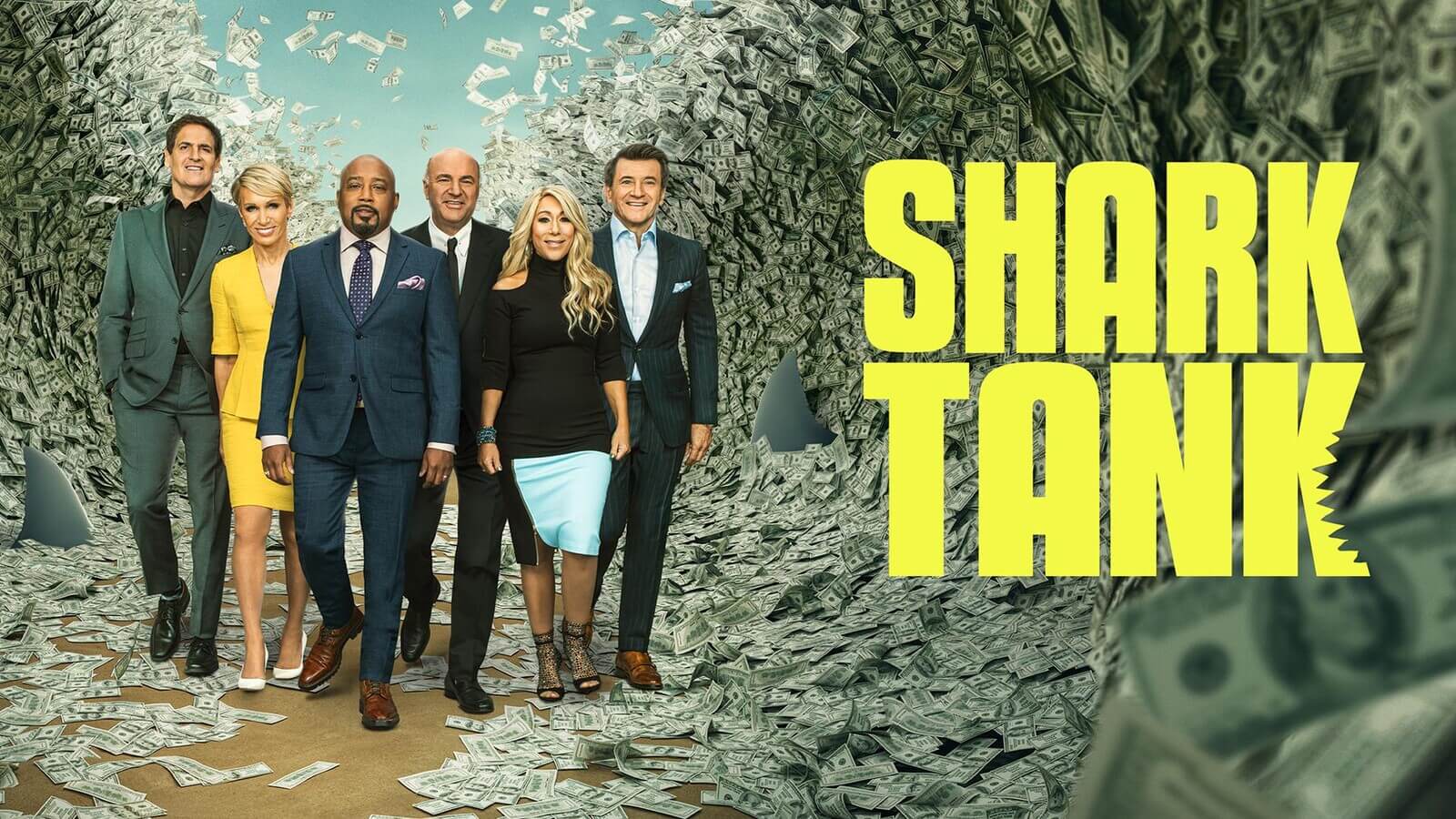
Levi Wilson and Tim Todd appeared on Season 10 of Shark Tank, asking for a $550,000 investment in exchange for 15% equity in Life Lift Systems. The pitch was immediately engaging.
The founders demonstrated the shelter’s rapid deployment on stage, effectively transforming a normal-looking bed into a fortified steel bunker. The Sharks even climbed inside the shelter to test the interior space, confirming that it comfortably fit four adults.
The tension during the pitch shifted from awe over the engineering to intense scrutiny over the financials. The founders revealed that each unit cost approximately $3,600 to manufacture and wholesaled for $3,850, leaving an incredibly tight margin. When sold directly to consumers at retail, the units cost around $6,000 fully installed. The Sharks were universally concerned that these slim margins would cripple the company’s cash flow during a growth phase.
Robert Herjavec liked the product but did not see it as a viable investment for his portfolio, and he quickly exited negotiations.
Kevin O’Leary compared the product to selling life insurance and also declined to invest.
Guest Shark Charles Barkley questioned the founders’ commitment, noting that Levi still ran his machine shop and Tim worked in marketing.
However, Mark Cuban and Lori Greiner both saw the massive consumer potential. Both Sharks offered the requested $550,000 but demanded 25% equity. Mark leaned heavily on his Texas roots, arguing his geographic proximity to Tornado Alley made him the ideal partner.
Lori pushed back, insisting she was just as accessible. Wilson and Todd countered, asking if the two Sharks would partner for 20% equity plus a $100 per unit royalty.
Cuban explicitly warned them against taking a royalty deal, as it would drain cash out of a business that already suffered from low margins. Instead, Cuban gave them an ultimatum: take his solo offer of $550,000 for 25% equity without the royalty. The founders conferred and accepted Mark’s offer, securing the necessary capital to scale production.
| Metric | Details |
| Season / Episode | Season 10, Episode 13 |
| Initial Ask & Valuation | $550,000 for 15% ($3.66M Valuation) |
| Sharks Present | Mark Cuban, Lori Greiner, Kevin O’Leary, Robert Herjavec, Charles Barkley |
| Notable Offers | Lori Greiner ($550k for 25%), Mark Cuban ($550k for 25%) |
| Final On-Air Deal | Mark Cuban: $550,000 for 25% equity |

Did the Life Lift Systems Deal Actually Close?
Yes. While many deals made under the studio lights dissolve during the intense due diligence phase, the Life Lift Systems agreement with Mark Cuban went through entirely. Cuban’s team verified the patents, the structural certifications from the Texas Tech Wind Institute, and the early sales figures.
Following the broadcast, the company proudly displayed its affiliation with Cuban and appeared as an official portfolio company on his investment website.
With the capital injection, Wilson and Todd expanded their distribution network rapidly, securing 19 wholesale dealers across multiple states. They hired renowned weather personality Aaron Tuttle as a brand spokesperson, giving the company instant credibility among residents in the Midwest.
Life Lift Systems After Shark Tank: The Current Update
In the immediate years following the broadcast, the company experienced a tremendous surge in demand. Recognizing that not every customer wanted a shelter in their bedroom, the company diversified its product line.
In 2021, they executed a full corporate rebrand, changing their name from Life Lift Systems to Vortex Vaults.
Under the Vortex Vaults banner, they introduced the “Project Station Shelter,” a heavy-duty steel workbench designed for garages or sheds that doubled as a storm bunker. They also released the “Safe Shield,” a more traditional standalone safe room. By April 2023, this diversification and the lingering Shark Tank effect pushed the company’s annual revenue to an impressive $4 million.
However, the rapid scaling appeared to fracture the company’s internal operations. Behind the scenes, co-founder Tim Todd had already exited the business back in June 2019 to pursue other projects, leaving Levi Wilson to manage the escalating operational complexities alone.
By mid-2023, the facade of a thriving enterprise began to crack. A significant volume of customer complaints flooded online forums and the Better Business Bureau. Customers reported severe issues with the heavy scissor-lift mechanisms, noting that beds would fail to elevate or would become misaligned, rendering the shelter useless in an emergency. Other consumers reported paying thousands of dollars upfront for shelters that were never delivered.
The Better Business Bureau launched a formal investigation into Vortex Vaults in January 2023. By April 2023, the BBB reported that all attempts to contact the business had failed; emails bounced back, phone numbers were disconnected, and physical mail was returned to the sender.
The company had completely vanished, leaving frustrated customers with defective units and zero warranty support. Competitors in the region, such as Kansas-based Storm Defense Systems, reported receiving daily calls from stranded Vortex Vaults customers looking for replacement parts or maintenance, with industry insiders noting that Levi Wilson had abruptly shut the business down and cut all communication.
What is the Net Worth and Valuation of Life Lift Systems?
As of today, the estimated valuation of Life Lift Systems (Vortex Vaults) is $0.
During their Shark Tank pitch, the founders implied a valuation of roughly $3.66 million. By accepting Mark Cuban’s offer of $550,000 for 25%, the company’s post-money valuation was established at $2.2 million.
At its absolute peak in early 2023, business experts estimated the company’s valuation hovered between $5 million and $8 million based on their $4 million trailing annual revenue.
Because the company dissolved under the weight of unfulfilled orders and mechanical liabilities, the equity held by Mark Cuban is now worthless. The net worth of the founders tied directly to this specific venture has been completely wiped out.
Tim Todd, having exited in 2019, moved on to start other businesses including Delta Heavy Metal and WeedHosters, insulating his personal finances from the 2023 collapse. The exact financial status of Levi Wilson remains private following the company’s shuttering.
Is Life Lift Systems Still in Business?
No. Life Lift Systems, operating as Vortex Vaults, is permanently out of business. As of today, the official website domain is dead, the company’s social media profiles have been deactivated, and the corporate office in Oklahoma City has been vacated.
Homeowners who purchased a Life Lift bed or a Vortex Vault garage unit no longer have access to proprietary replacement parts or customer service. If a motor fails or a battery backup dies, owners must rely on third-party mechanics to retrofit the beds with generic hardware.

Top Life Lift Systems Alternatives
For homeowners in high-risk weather zones looking for security following the collapse of Life Lift Systems, the market has several reliable alternatives that do not rely on complex, failure-prone lifting mechanisms.
1. Storm Defense Systems
Based in Kansas, this company absorbed much of the regional demand after Vortex Vaults disappeared. They specialize in heavy-duty, above-ground steel safe rooms that bolt directly to the concrete slab in a garage or basement. Because these units do not require motors to deploy, the risk of mechanical failure during an emergency is effectively zero.
2. Survive-A-Storm Shelters
Recognized as one of the largest storm shelter manufacturers in the United States, Survive-A-Storm offers both above-ground and below-ground models. Their products are sold through major home improvement retailers like The Home Depot, providing buyers with an added layer of consumer protection, warranties, and reliable installation services.
3. Custom Built FEMA Safe Rooms
For homeowners building new houses or undertaking major renovations, constructing a permanent FEMA-certified safe room using reinforced concrete and steel doors remains the gold standard. While this requires dedicated square footage, something the Life Lift bed originally tried to solve, a dedicated concrete bunker provides absolute certainty during extreme wind events without the anxiety of battery failures or stuck gears.