Crio Bru Cacao Shark Tank Update: Net Worth, Reviews & Where Are They Now?

For individuals trying to kick a daily coffee habit, the beverage aisles in local grocery stores look completely different today than they did a decade ago.
Long before functional mushrooms and herbal teas became viral trends, there was a unique product called Crio Bru Cacao.
Featured on Season 5 of the television show Shark Tank, Crio Bru presented a very bold idea to the world: a hot, brewed morning beverage made entirely from roasted and ground cacao beans. It brews exactly like a regular pot of coffee, but it yields a rich, dark drink that smells like pure chocolate.
Years after the founders walked onto the famous reality television stage, the beverage landscape has shifted dramatically.
Modern consumers actively search for drinks that provide energy and focus without the anxiety, upset stomachs, or mid-afternoon crashes associated with heavy coffee consumption.
So, what exactly happened to Crio Bru after the celebrity investors rejected the business? Did the company survive the harsh criticism?
This article provides a complete update on Crio Bru Cacao, detailing the company’s current net worth, its battle against modern coffee substitutes, and the exciting new scientific research backing its core ingredient.
What Is Crio Bru Cacao?
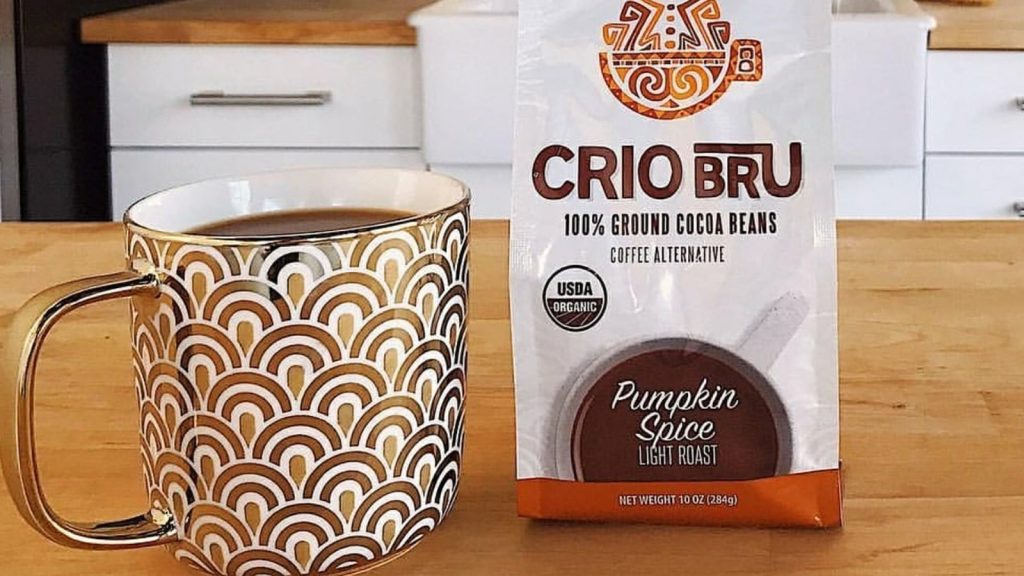
Crio Bru Cacao is a coffee substitute made from 100 percent pure, ethically sourced cacao beans. Cacao beans are the exact same agricultural product used to create dark chocolate.
However, instead of processing the beans into sugary candy bars, syrups, or instant hot cocoa powders, Crio Bru leaves the beans in their natural, unadulterated state.
The company carefully roasts and grinds the cacao beans, packaging them much like premium coffee grounds.
To make a cup of Crio Bru, consumers simply place the grounds in a standard French press or a traditional drip coffee maker equipped with a gold-tone filter, add hot water, and let the grounds steep.
The end result is a dark, robust, and full-bodied drink. It is important to note that Crio Bru is completely different from traditional hot chocolate.
Hot chocolate relies on processed cocoa powder, and it is usually loaded with sugar, dairy, and artificial additives.
Crio Bru is entirely unsweetened, naturally bitter, and extremely rich, offering the complex flavor profile of pure dark chocolate. Individuals can drink it black, or they can customize the beverage with preferred creamers, milks, and natural sweeteners.

The Nutritional Powerhouse: Theobromine and Epigenetic Aging
One of the primary reasons health-conscious consumers switch to Crio Bru in 2026 is its unique nutritional profile.
Because the drink is brewed from whole cacao beans, it is packed with naturally occurring antioxidants, magnesium, iron, and zinc. It is also naturally gluten-free, dairy-free, sugar-free, paleo-friendly, and keto-friendly.
However, the most important component of the drink is a compound called theobromine.
Crio Bru is 99.9 percent caffeine-free. Instead of relying on caffeine, it provides energy through theobromine, a natural stimulant found exclusively in cacao. Theobromine provides a gentle, long-lasting energy boost.
Because it does not cross the blood-brain barrier as aggressively as caffeine, it increases focus and alertness without causing anxiety, increased heart rates, or the dreaded afternoon energy crash.
Furthermore, groundbreaking scientific research has recently brought massive global attention to theobromine. In December 2025, a major study was published by researchers at King’s College London in the scientific journal Aging.
The researchers studied the blood samples of hundreds of individuals and made an incredible discovery regarding human aging.
The study found that higher levels of theobromine in the blood are directly linked to slower biological aging. The science showed that people who consumed more theobromine had longer telomeres, which are the protective caps on the ends of human DNA.
They also scored much better on epigenetic aging clocks. This means that drinking a daily cup of brewed cacao might actually help keep human cells younger and healthier over time.
Who Is the Founder of Crio Bru Cacao?
The brand was originally created by Dr. Eric Durtschi. Dr. Durtschi holds a Ph.D. in Botany and Plant Sciences, giving him a deep and technical understanding of plant chemistry, agriculture, and human nutrition.
He also comes from a family with deep roots in the American chocolate industry; his father worked for the massive candy company Russell Stover.
During his past travels to South America, Dr. Durtschi learned about ancient drinks made from crushed cacao beans. These rich beverages were heavily consumed by the ancient Mayan and Aztec civilizations.
Using his extensive background in plant science and his love for culinary arts, he spent years experimenting with roasting temperatures. His goal was to perfect a proprietary roasting process that would allow hard cacao beans to be brewed just like common coffee beans.
When Crio Bru appeared on national television, Dr. Durtschi was joined by business co-founder Jon Fotheringham.
However, corporate records show that Jon Fotheringham actually left the company in December 2013, which was several months before their television episode even aired to the public.
Today, Dr. Eric Durtschi remains the President, driving force, and primary innovator behind the Crio Bru brand.
How Was the Shark Tank Pitch of Crio Bru Cacao?
Dr. Durtschi and Jon Fotheringham walked into the Shark Tank during Season 5, Episode 26.
They stood before the celebrity investors and asked for a massive investment of $1 million in exchange for a 10 percent equity stake in Crio Bru Cacao. This specific financial request gave their young, unproven company an implied total valuation of $10 million.
The founders confidently pitched their product as a healthy, low-calorie alternative that could easily capture a massive slice of the multi-billion-dollar global coffee market.
They poured fresh, hot samples for the investors, hoping the rich chocolate aroma would secure a lucrative deal.
Unfortunately, the taste test was an absolute disaster.
Because Crio Bru is completely unsweetened and naturally bitter, it drinks much like a strong cup of black coffee. The investors, perhaps expecting a sweet and sugary cup of hot cocoa, were shocked by the robust flavor.
Mark Cuban, Robert Herjavec, and Daymond John all visibly grimaced upon tasting the drink.
“Not a fan, guys, I’m out,” Mark Cuban stated very quickly. Daymond John was even harsher in his critique, calling the taste of the beverage “horrible” before dropping out of the negotiations.
Robert Herjavec also passed immediately due to his strong dislike of the flavor.
Investor Kevin O’Leary did not focus on the taste of the drink; instead, he focused entirely on the math. He demanded to know how the two founders could possibly justify a $10 million valuation.
The founders admitted that while they projected $1.5 million in future sales for the year, they had only earned a mere $150,000 in actual profit up to that point.
Kevin O’Leary quickly bowed out, refusing to pay 100 times their actual profit for a small share of the business.
Barbara Corcoran was the only investor who actually liked the taste of the brewed cacao. She noted that the other men were likely disappointed simply because their brains expected the taste of traditional coffee.
However, even Barbara Corcoran could not get past the massive $10 million valuation. She declined to invest her money, and the founders were forced to walk out of the room with no deal.
What Happened to Crio Bru After Shark Tank?
Despite the harsh rejection, the failed negotiations, and the national television criticism of their product’s taste, Crio Bru experienced a massive wave of immediate success. This is a classic example of the phenomenon widely known as the “Shark Tank bump.”
In an interview following the broadcast, Dr. Durtschi revealed that the company received an entire month’s worth of regular sales within just one hour of the episode airing on television.
It turns out that while the celebrity investors hated the bitter taste, thousands of health-conscious American consumers loved the idea of a healthy, completely caffeine-free coffee substitute.
Without the investment money, Dr. Durtschi pushed the business forward independently. The company improved its packaging and introduced new, exciting roast profiles.
They launched specific regional roasts like the Dominican Republic Light Roast and the Venezuela Medium Roast. They also developed exciting new flavor infusions, including Double Chocolate, Chocolate Coconut, Chocolate Peanut Butter, and seasonal Peppermint options.
The company also expanded its corporate structure and distribution footprint significantly. By 2020, financial data from PitchBook indicated that the company successfully secured Later Stage Venture Capital funding, allowing them to scale their operations and meet rising national demand.
Crio Bru vs. Mushroom Coffee Competitors
By the year 2026, the coffee substitute market has exploded into a multi-billion-dollar industry.
Crio Bru now competes directly with heavily marketed, trendy brands like MUD/WTR and Ryze Mushroom Coffee. So, how does the original brewed cacao stack up against these modern mushroom blends?
| Feature | Crio Bru Brewed Cacao | MUD/WTR (:rise Cacao) | Ryze Mushroom Coffee |
| Primary Base Ingredient | 100% Pure Ground Cacao | Black Tea, Cacao, Chai Spices | Arabica Coffee |
| Functional Additions | None (Naturally occurring Theobromine) | Lion’s Mane, Chaga, Reishi, Cordyceps | 6 Adaptogenic Mushrooms |
| Caffeine Profile | 99.9% Caffeine-Free | Low Caffeine (~35mg) | Moderate Caffeine (~48mg) |
| Flavor Profile | Unsweetened Dark Chocolate | Earthy, Chai-Spiced | Earthy, Mild Coffee |
| Preparation Method | Brewed in a French Press or Coffee Maker | Powders mixed into hot water | Powders mixed into hot water |
| Approximate 2026 Price | $16.95 for a 10 oz bag (23 servings) | $60.00 for 30 servings | $30.00 for 30 servings |
Data reflects standard 2026 formulations and retail pricing metrics.
When comparing the options, clear differences emerge. MUD/WTR and Ryze are instant powders that dissolve into hot water, while Crio Bru consists of actual grounds that must steep in a French press.
Furthermore, both MUD/WTR and Ryze contain hidden caffeine sources; MUD/WTR uses black tea, and Ryze uses actual Arabica coffee.
For consumers who strictly want to avoid all caffeine and mushrooms, but still desire a hot, freshly brewed morning beverage, Crio Bru remains the most affordable and authentic choice on the market.
Navigating the Global Cocoa Crisis
The success of Crio Bru in 2026 is especially impressive given the current economic climate surrounding global agriculture. In the 2025 and 2026 seasons, the global cocoa market faced massive supply chain catastrophes.
Severe weather patterns and aggressive crop diseases in West Africa, a region that normally produces 60 percent of the world’s cocoa, caused global harvests to plummet. Consequently, the price of raw cocoa skyrocketed to record highs.
Despite these massive hurdles, Crio Bru has successfully maintained its business. Because the company relies on independent, ethical sourcing from sustainable farms in South America and the Caribbean, such as Ecuador, Venezuela, and the Dominican Republic, it has navigated the African supply collapse while protecting its product quality. This high-quality, single-origin sourcing justifies the brand’s premium status in the beverage aisle.

Where to Buy Crio Bru in 2026
Today, Crio Bru is widely accessible to shoppers across the United States. Consumers can purchase the product directly from the official Crio Bru website, where the company offers a popular subscription model to help buyers save money on recurring monthly orders.
A standard 10-ounce bag of Crio Bru currently retails for approximately $16.95, which yields roughly 23 individual servings. A larger, bulk-sized 24-ounce bag costs $38.95.
Beyond their official website, Crio Bru is a top-selling beverage on Amazon. The brand has also secured highly valuable retail shelf space in major grocery chains across the country. Shoppers can find the bags locally at Whole Foods, Walmart, Safeway, Sam’s Club, and Kroger.
Crio Bru Cacao Net Worth and 2026 Revenue
Looking back at the television pitch, was Kevin O’Leary wrong to walk away from a $10 million valuation? The current financial numbers suggest he might have missed a lucrative opportunity.
As of 2026, Crio Bru Cacao has an estimated total net worth of over $15 million. Corporate tracking data indicates that the company generates a steady $3 million to $4 million in annual retail revenue.
This represents a massive, sustained increase from the $150,000 they had actually banked when they stood nervously on the television stage in 2014.
Is Crio Bru Cacao Still in Business?
Yes, absolutely. Crio Bru Cacao is fully operational, growing, and highly profitable in the year 2026.
Dr. Eric Durtschi’s ambitious vision of turning ancient cacao traditions into a modern morning ritual has paid off wonderfully.
Despite the brutal feedback from famous billionaire investors, Crio Bru proved that a strong product, backed by undeniable health benefits and a fiercely loyal customer base, can thrive entirely on its own merits.
With new scientific research from King’s College London proving the powerful anti-aging benefits of theobromine, and a massive cultural shift toward healthy, caffeine-free beverages, Crio Bru Cacao is positioned perfectly for continued dominance in the modern beverage industry.